2026-10-03 · On this day
October 3 in Rock History: The Who Return, Springsteen Opens The River Tour, Genesis Hits a New Peak
Five significant October 3 stories: a landmark Who album and tour, the opening night of Bruce Springsteen's River Tour, Genesis at its 1980s commercial peak, Sinéad O'Connor's unforgettable act of protest, and the birth of blues-rock giant Stevie Ray Vaughan.
1975: The Who release The Who By Numbers and return to the stage

October 3, 1975 was a double landmark for The Who. The band released The Who By Numbers in the United Kingdom and began an eleven-date UK run billed as The Greatest Rock and Roll Band in the World tour.
Produced and mixed by Glyn Johns, the album was more inward-looking than the band's earlier rock operas. Pete Townshend wrote openly about age, doubt and life inside a world-famous group, while John Entwistle created the connect-the-dots sleeve. The record included Slip Kid, Dreaming from the Waist and Squeeze Box and reached the UK Top 10.
The tour put the original four-piece back onstage after an extended break from regular touring. It also began the live campaign that would carry The Who through Britain, Europe and North America, reconnecting a reflective studio album with the explosive concert identity on which the band's legend was built.
1980: Bruce Springsteen opens The River Tour in Ann Arbor

On October 3, 1980, Bruce Springsteen and the E Street Band opened The River Tour at Crisler Arena in Ann Arbor, Michigan. The first night launched a 138-show journey that would run until September 1981.
Springsteen placed eleven songs from the then-unreleased double album into the opening set, including world premieres of Wreck on the Highway, Jackson Cage, Out in the Street, Cadillac Ranch, I Wanna Marry You, Crush on You and Stolen Car. The concert surrounded the new material with Born to Run, Badlands, Thunder Road, Rosalita and other established stage anthems.
The encore made the night even more local: Detroit hero Bob Seger joined Springsteen for the final Thunder Road. The show set the scale and emotional range of a tour that became one of the defining arena-rock runs of the early 1980s.
1983: Genesis release Genesis
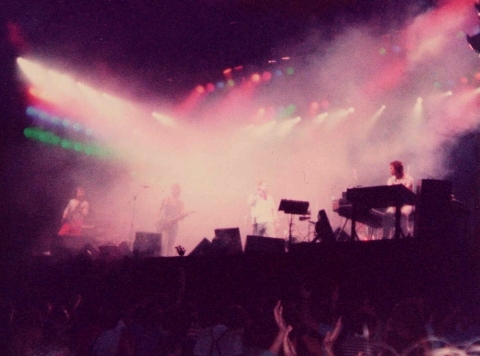
Genesis released its self-titled twelfth studio album on October 3, 1983. Written collectively by Tony Banks, Phil Collins and Mike Rutherford and recorded entirely at the band's own studio, The Farm, it presented the trio as a unified creative force rather than a collection of separate songwriters.
The album moved confidently between the dark electronic drama of Mama, the concise pop-rock of That's All and the linked progressive sweep of Home by the Sea and Second Home by the Sea. It reached number one in the United Kingdom and number nine in the United States, where it sold more than four million copies.
Genesis captured a crucial transition point: the band retained the atmosphere and musicianship of its progressive-rock past while mastering the direct hooks and production scale that would define its global 1980s success.
1992: Sinéad O'Connor turns an SNL performance into protest

On October 3, 1992, Sinéad O'Connor appeared as the musical guest on Saturday Night Live. During an a cappella performance of Bob Marley's War, she altered the lyrics to address child abuse and ended by tearing a photograph of Pope John Paul II before looking into the camera and declaring that the real enemy must be confronted.
The action was not shown during rehearsal, and the studio went to commercial in silence. The backlash was immediate and severe, but the performance later came to be understood in the context of O'Connor's long-standing criticism of abuse and institutional power.
It remains one of television's most consequential musical protests: a moment when a singer used a live entertainment platform not to promote a record, but to force a subject into public view regardless of the personal cost.
1954: Stevie Ray Vaughan is born in Dallas

Stevie Ray Vaughan was born in Dallas, Texas, on October 3, 1954. He is the one birthday in this edition because his impact on blues rock and electric guitar history is impossible to treat as a footnote.
Vaughan developed a fierce, immediately recognizable style from Texas blues, Chicago blues, rock and jazz influences. With Double Trouble, he brought that vocabulary into the 1980s mainstream through Texas Flood, Couldn't Stand the Weather, Soul to Soul and In Step.
His recording career was brief, but his tone, rhythmic attack and expressive lead playing helped drive a modern blues revival and influenced generations of rock guitarists. October 3 remains a natural date for celebrating both his music and the bridge he built between blues tradition and arena-sized rock power.
SOURCES
The Who official history — 1975 ↗The Who official album page — The Who By Numbers ↗Brucebase — 1980 and the opening of The River Tour ↗Genesis official store — Genesis album history ↗Official Charts — Genesis chart history ↗PBS American Masters — Sinéad O'Connor on Saturday Night Live ↗Official Stevie Ray Vaughan biography ↗